

Introduction
The United States has one of the world’s most structured and comprehensive taxation systems. Whether you are an accounting student, tax professional, commerce graduate, CPA aspirant, EA candidate, or someone planning to build a career in U.S. taxation, understanding the fundamentals is the first step.
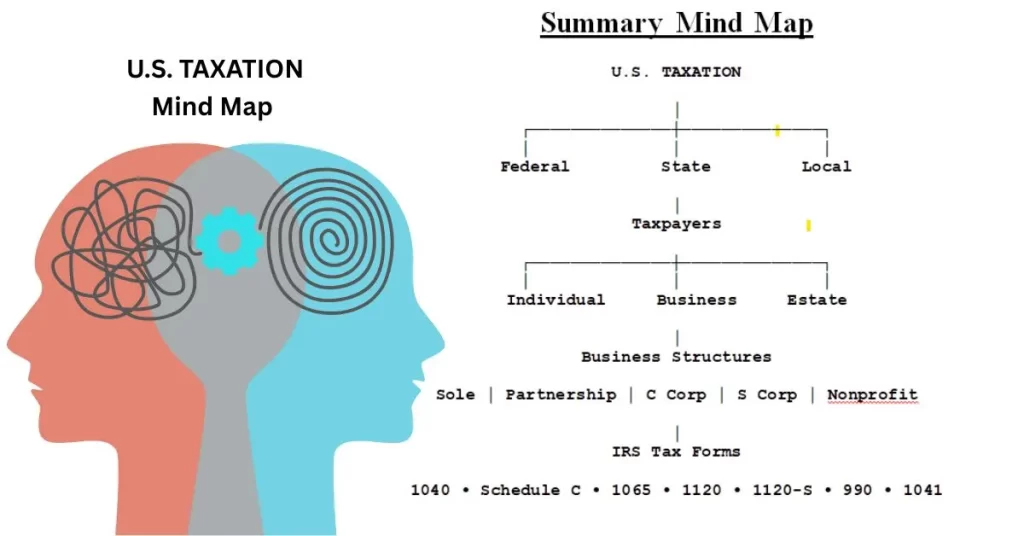
Unlike many countries where income tax is administered mainly at the national level, the United States follows a multi-layered tax system. Individuals and businesses may be required to comply with tax laws at the Federal, State, and Local levels depending on where they live or operate. Understanding these layers, different taxpayer categories, and the appropriate IRS tax forms is essential for accurate tax compliance and professional growth. The uploaded study material also emphasises these foundational concepts before moving on to advanced topics.
This study guide introduces the core concepts of U.S. taxation in a simple, practical, and beginner-friendly manner.
Table of Contents
Learning Objectives of U.S. Taxation Basics
After completing this chapter, you should be able to:
- Understand the structure of the U.S. tax system.
- Differentiate between Federal, State, and Local taxes.
- Identify different categories of taxpayers.
- Understand major business entities.
- Learn which IRS forms are used by different taxpayers.
- Understand the difference between pass-through taxation and corporate taxation.
Understanding the U.S. Taxation System
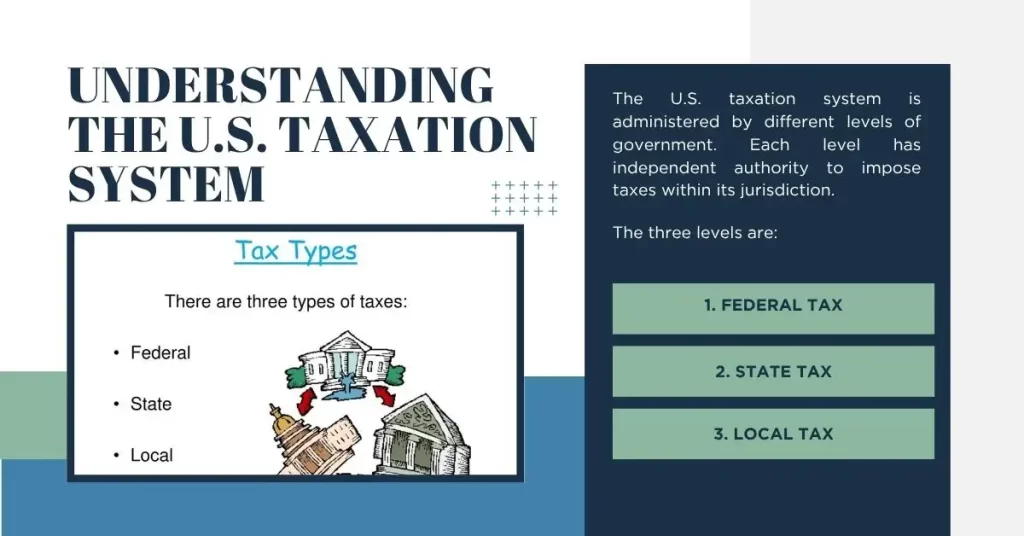
The U.S. taxation system is administered by different levels of government. Each level has independent authority to impose taxes within its jurisdiction.
The Ultimate Guide to the U.S. Tax System: What You Need to Know
The three levels are:
1. Federal Tax
Federal taxes are imposed by the U.S. Federal Government and administered primarily by the Internal Revenue Service (IRS). These taxes fund national programs such as defense, healthcare, infrastructure, and social security.
Examples include:
- Federal Income Tax
- Corporate Income Tax
- Payroll Taxes
- Excise Taxes
Federal tax laws apply across all states in the United States.
2. State Tax
Most U.S. states impose their own income taxes. Each state has separate tax laws, filing requirements, deductions, exemptions, and tax rates.
For example:
- California
- New York
- Illinois
Each has its own state income tax return.
However, a few states, such as Texas and Florida, do not levy a state personal income tax.
3. Local Tax
Some counties, municipalities, or cities impose additional local taxes.
Examples include:
- City Income Tax
- County Tax
- School District Tax
Not every locality charges local taxes. The requirement depends on where a taxpayer resides or earns income.
The uploaded training material highlights that U.S. taxpayers may be subject to taxation at Federal, State, and Local levels, unlike systems where income tax is collected only at the national level.
Comparison with the Indian Tax System
For learners familiar with Indian taxation, one key difference is that India primarily collects income tax through the Central Government, whereas the United States allows taxation at multiple governmental levels.
Although both countries collect direct taxes on income, the U.S. system provides greater autonomy to individual states and, in some cases, local governments.
Tax Mastery for Expats: Ultimate Guide to Navigating US and India Tax Systems
Who Pays Tax in the United States?
Both individuals and organizations may have tax obligations.
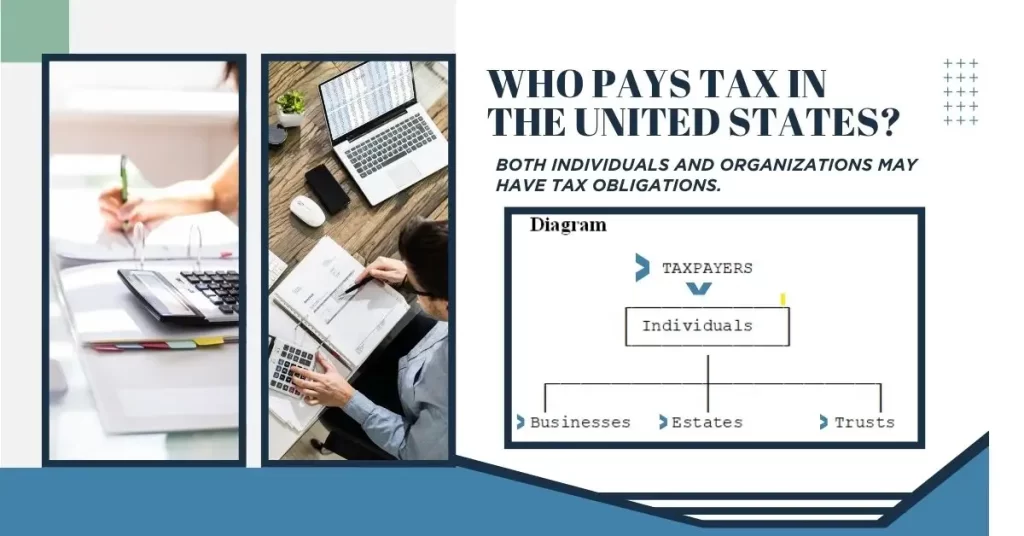
Major taxpayer categories include:
- Individuals
- Sole Proprietors
- Partnerships
- Corporations
- S Corporations
- Nonprofit Organizations
- Estates
- Trusts
Different taxpayers follow different filing requirements and IRS forms depending on their legal structure.
Individual Taxpayers
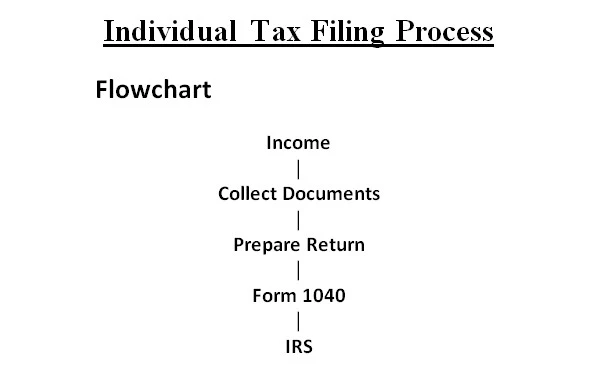
An individual taxpayer is any person who earns taxable income.
Common income sources include:
- Salary
- Business income
- Interest income
- Dividend income
- Rental income
- Capital gains
Most individuals file Form 1040, which is the primary federal individual income tax return. Sole proprietors also use Form 1040 together with Schedule C to report business income. (IRS)
Sole Proprietorship
A sole proprietorship is the simplest form of business ownership.
Characteristics include:
- Owned by one individual
- No separate legal entity
- Owner controls all business decisions
- Business income is reported on the owner’s personal tax return
For federal tax purposes, the business files:
- Form 1040
- Schedule C (Profit or Loss from Business)
The net business income flows directly to the owner’s individual tax return. (IRS)
Business Entities in the United States
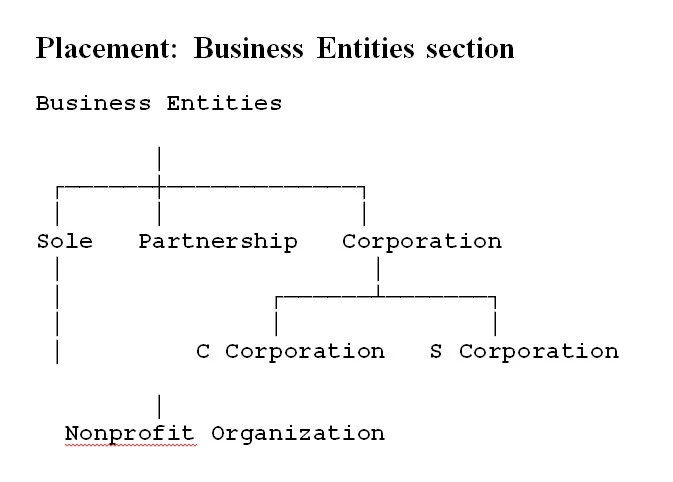
Businesses can operate under several legal structures. The choice affects taxation, liability, reporting requirements, and compliance.
The major business entities discussed in your study material include:
- Sole Proprietorship
- Partnership
- C Corporation
- S Corporation
- Nonprofit Organization
- Estate and Trust
Partnership
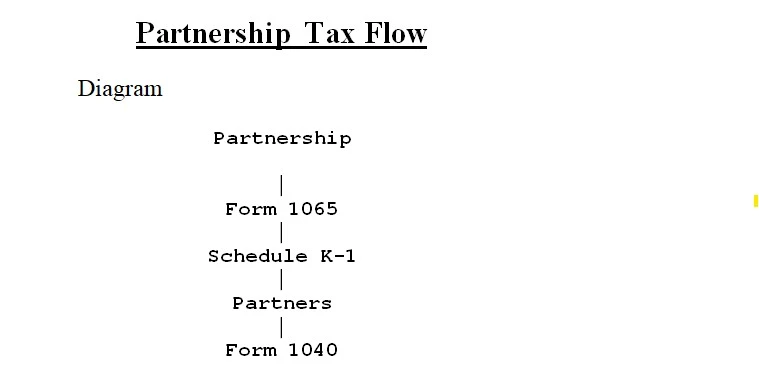
A partnership exists when two or more persons jointly own and operate a business.
Key features include:
- Shared ownership
- Shared profits and losses
- Pass-through taxation
- Partners report their share of income individually
The partnership files Form 1065, while
C Corporation
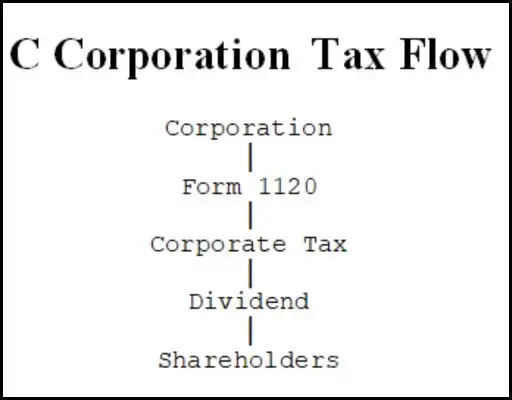
A C Corporation is a separate legal and taxable entity.
Characteristics include:
- Separate legal identity
- Corporate ownership
- Limited liability for shareholders
- Corporate tax paid by the corporation
After paying corporate income tax, profits distributed as dividends may also be taxed at the shareholder level. This is commonly referred to as double taxation.
C Corporations generally file Form 1120. (IRS)
S Corporation
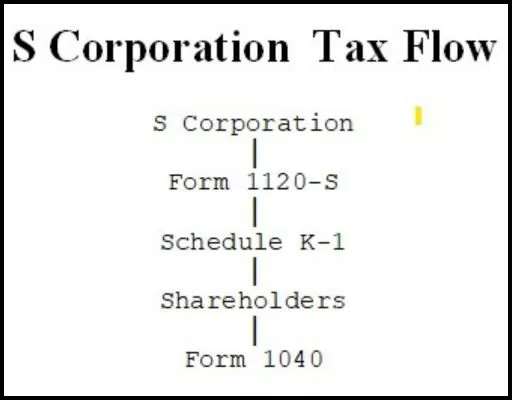
An S Corporation is designed to reduce the impact of double taxation for eligible corporations.
Important features include:
- Separate legal entity
- Pass-through taxation
- Income passes directly to shareholders
- Shareholders pay tax individually
An S Corporation files Form 1120-S, and shareholders receive Schedule K-1 reporting their share of income, deductions, and credits. (IRS)
Pass-Through Taxation
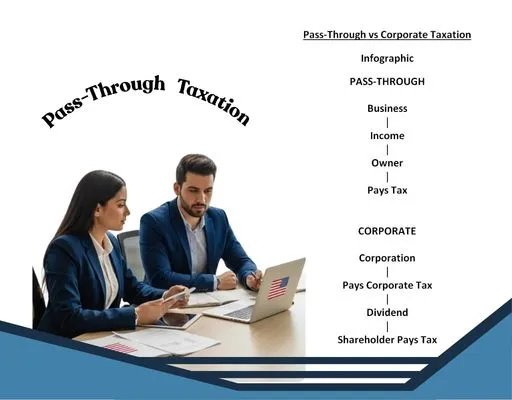
Pass-through taxation means the business itself generally does not pay federal income tax. Instead, income, deductions, credits, and losses pass directly to the owners, who report them on their individual tax returns.
Common pass-through entities include:
- Sole Proprietorship
- Partnership
- S Corporation
This concept is emphasized throughout the uploaded material because it is fundamental to understanding U.S. business taxation.
Nonprofit Organizations
Nonprofit organizations are established for charitable, educational, religious, or similar public purposes.
Although many nonprofits qualify for tax-exempt status, they still have filing and reporting obligations.
Most tax-exempt organizations file Form 990, which provides financial and operational information to the IRS. (IRS)
Estate and Trust
An estate or trust may become a separate taxable entity under U.S. tax law.
Typical examples include:
- Administration of a deceased person’s estate
- Trusts created for beneficiaries
These entities generally file Form 1041, U.S. Income Tax Return for Estates and Trusts, when applicable. The uploaded material introduces estates and trusts as separate taxpayer categories with their own filing requirements.
Major IRS Forms Every Beginner Should Know
| Taxpayer | Primary IRS Form |
|---|---|
| Individual | Form 1040 |
| Sole Proprietor | Form 1040 + Schedule C |
| Partnership | Form 1065 |
| C Corporation | Form 1120 |
| S Corporation | Form 1120-S |
| Nonprofit Organization | Form 990 |
| Estate & Trust | Form 1041 |
These forms form the foundation of U.S. federal income tax compliance and are repeatedly referenced in your source material.
Career Opportunities in U.S. Taxation
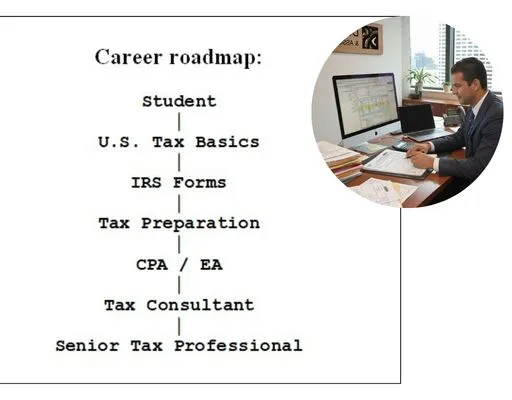
The demand for professionals with knowledge of taxation continues to grow, particularly in accounting firms, multinational companies, outsourcing firms, and tax consulting organizations.
Career opportunities include:
- U.S. Tax Associate
- Tax Analyst
- Tax Consultant
- CPA Support Professional
- Enrolled Agent (EA) Support
- Tax Compliance Specialist
- KPO/BPO Tax Professional
A strong understanding of taxation fundamentals can also serve as a stepping stone toward advanced credentials such as the CPA or Enrolled Agent (EA). The uploaded material encourages learners to build these fundamentals as the basis for future professional growth.
Key Takeaways – U.S. Taxation Basics
- The U.S. tax system operates at Federal, State, and Local levels.
- Different taxpayers have different filing obligations.
- Sole proprietorships, partnerships, and S corporations generally use pass-through taxation.
- C corporations are taxed separately and may be subject to double taxation.
- Understanding IRS forms is essential for tax compliance.
- A solid grasp of these fundamentals provides an excellent foundation for a career in U.S. taxation and finance.
