


Introduction: The Tax Filing Dilemma – Should You File This Year?
File A Tax Return: Tax season can feel confusing, especially if you’re unsure whether you need to file. Did you know 1 in 10 Americans misses out on tax refunds simply because they didn’t submit a return—even when they owed nothing? Whether you’re a student with a part-time job, a freelancer navigating gig income, or a retiree living on Social Security, understanding IRS filing rules could put hundreds (or thousands) back in your pocket.
This guide cuts through the complexity, answering critical questions like:
- “Do I have to file if I don’t owe taxes?” (Spoiler: Sometimes yes!)
- “What’s the real cost of skipping a return?” (Hint: It’s not just about penalties.)
- “How can filing benefit me—even with low income?” (EITC refunds, loan approvals, and more.)
We’ll break down 2025 IRS thresholds, share real-world case studies, and reveal the hidden perks of filing that most people overlook. Let’s demystify your tax responsibilities—and opportunities—once and for all.
Why trust this guide? All facts are verified against IRS.gov, Tax Policy Center research (2025), and CPA recommendations, with plain-English explanations anyone can follow.
1. Who Must File a Tax Return? (IRS Income Thresholds Explained)

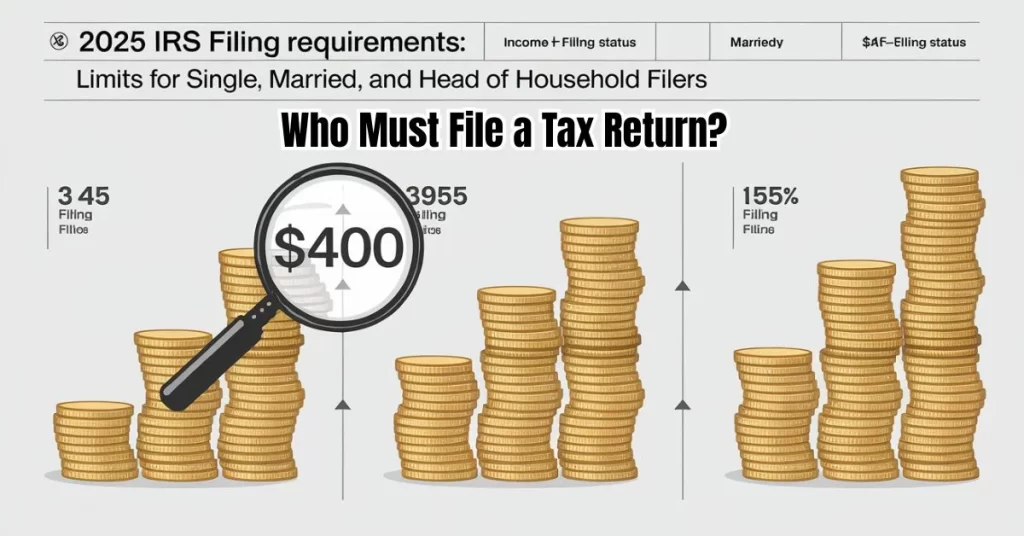
The IRS sets income thresholds based on filing status, age, and income type. For 2025:
| Filing Status | Under 65 | 65+ |
| Single | $14,600 | $16,550 |
| Married (Joint) | $29,200 | $30,700* |
| Head of Household | $21,900 | $23,850 |
*Age-specific thresholds apply. Self-employed individuals must file if their net earnings exceed $400 (IRS Rule).
File a Tax Return: Why This Matters:
The IRS sets minimum income levels to reduce paperwork for low earners. However, filing is mandatory if you meet these thresholds because:
- Tax Compliance: The government tracks income to prevent evasion.
- Social Programs: Income data determines Medicaid, SNAP, or housing assistance eligibility.
- Self-Employment: Even $400 in freelance income triggers filing to pay Social Security/Medicare taxes.
Example: A 20-year-old earning 15,000(Single status)∗∗must file∗∗, while someone earning 15,000 (Single status)∗∗must file∗∗, while someone earning 14,000 may skip it—unless they qualify for refundable credits.
Know more about the full details of Tax Brackets: How the 2025 Inflation-Adjusted Tax Brackets Will Give You More Money to Keep
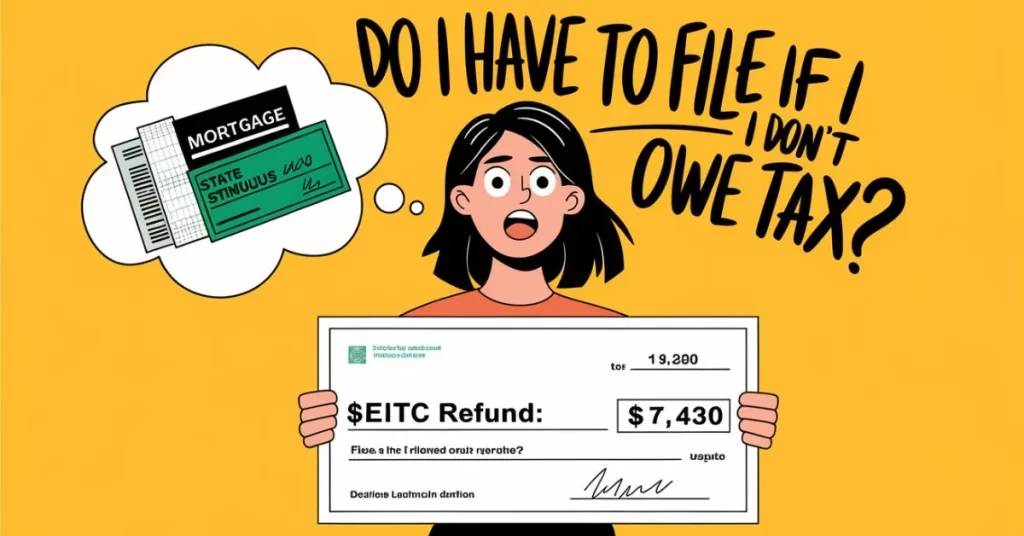
2. Do I Have to File If I Don’t Owe Tax? 3 Surprising Reasons You Should
Why This Matters:
Filing without owing unlocks financial benefits:
- Refundable Credits (EITC, Child Tax Credit): These are “free money” even with $0 tax liability.
- Government Rebates: Some states (e.g., California) require a filed return to issue stimulus checks.
- Future-Proofing: Banks and landlords often demand tax transcripts for loans/rentals.
Example:
Sarah, a college student earning $8,000/year, filed and received a $1,502 refund from the American Opportunity Credit.
- Refundable Credits: Earned Income Tax Credit (EITC) pays up to $7,430 (2025).
- Stimulus/Gov’t Benefits: Unclaimed 2024 rebates require a 2025 filing.
- Loan Applications: Mortgage lenders often request 2 years of tax returns.
Key Insight: The IRS won’t chase you if you don’t owe, but you leave money on the table.
Also read: Don’t Miss Out! Claim the Earned Pay Tax Credit (EITC) and Get the Discount You Deserve
3. Benefits of Filing Taxes (Even With $0 Owed)

A 2025 Tax Policy Center study found 23% of non-filers missed out on refunds averaging $1,815. Benefits include:
Why This Matters:
- Social Security: Non-filers may receive lower retirement benefits if earnings aren’t reported.
- Student Loans: Income-driven repayment plans use AGI from tax returns. No filing = higher payments.
- State Benefits: Colorado’s TABOR refunds ($800+ in 2025) require a filed return.
Data Point: 12% of non-filers later discover they missed Pell Grant eligibility because they didn’t file (National College Access Network, 2025).
Know more about – Social Security Taxes Affect Your Future: Key Facts, Risks, and Legal Consequences of Non-Payment
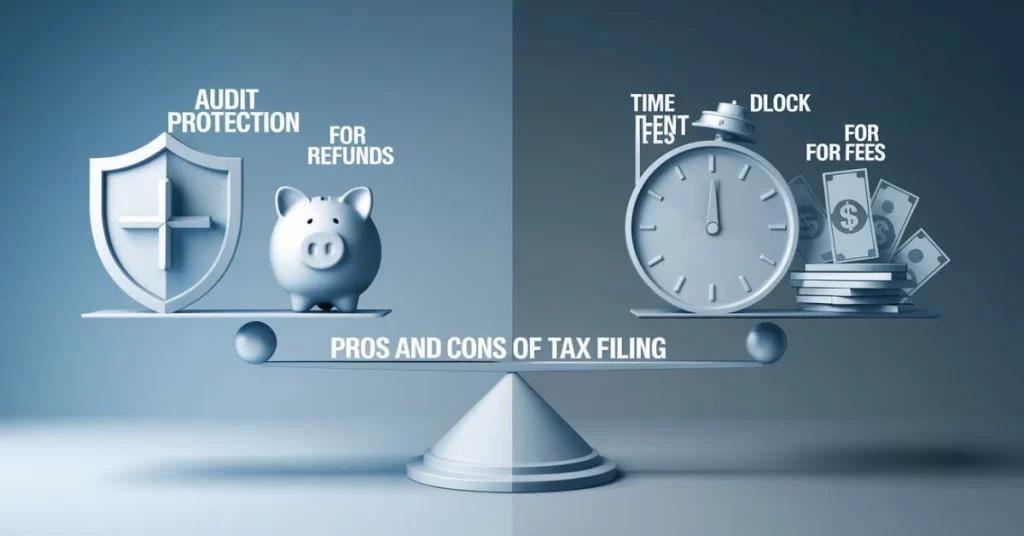
4. Pros and Cons of Tax Filing: A Balanced Look
Why This Matters:
| Pros | Cons |
| • Audit Protection: The statute of limitations starts when the filing is made. No filing = IRS can audit you indefinitely. | • Time/Cost: DIY takes ~13 hours; pros charge 150–150–400. |
| • Disaster Relief: FEMA requires tax returns for disaster aid verification. | • Complexity: Gig workers may owe quarterly estimated taxes. |
Trade off: For most, the pros outweigh the cons, but retirees with only Social Security might skip it.
5. Why This Matters: Real-World Consequences
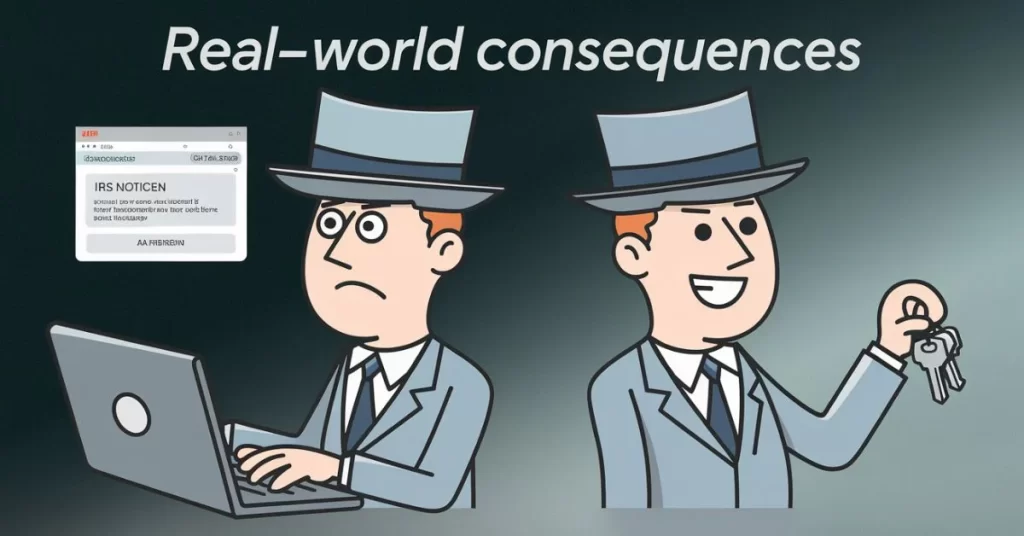
Why This Matters:
Credit Applications: Mortgage denials spike for “thin-file” borrowers without tax returns.
Legal Issues: Unreported cash tips or Venmo income (>$600) can trigger IRS notices later.
Case Study: Maria, a freelancer, didn’t file for 2 years. When audited, she owed **2,100 in back taxes + penalties∗∗—despite originally owing 2,100 in back taxes + penalties∗∗—despite originally owing 0.
6. Final Decision: When to Skip Filing (Legally)
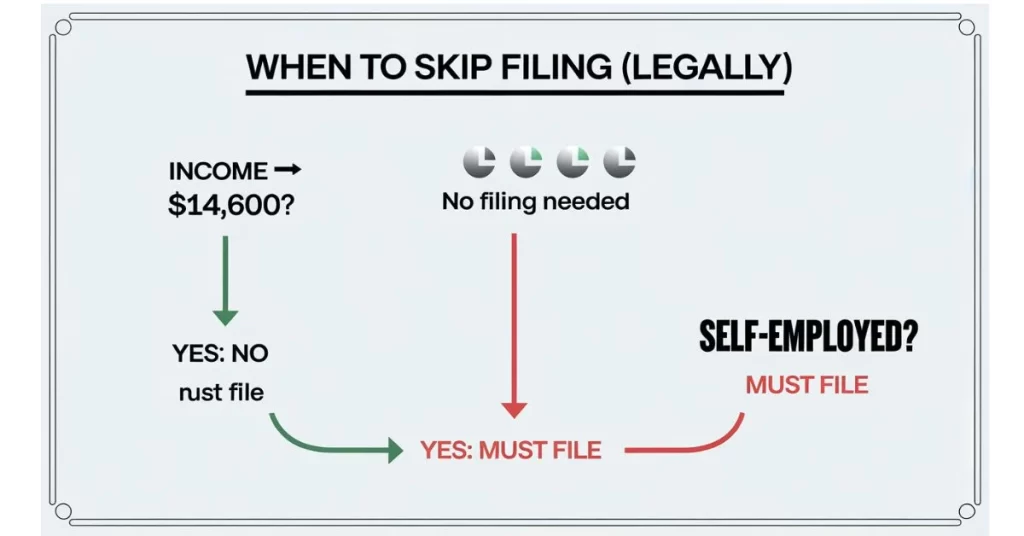
Why This Matters:
You can skip filing if:
Income is below IRS thresholds, and you have no refundable credits or special situations (e.g., HSA contributions). But: Always check the IRS Interactive Tax Assistant —rules change yearly.
FAQ Deep Dives

1. Can I file taxes with no income? Why would I bother?
Yes, you can—and sometimes should—file even with $0 income. Key reasons:
- Refundable Credits: Claim the Earned Income Tax Credit (up to 7,430 in 2025) or the American Opportunity Credit (7,430 in 2025) or the American Opportunity Credit (1,502 max) if eligible, even if you owe nothing.
- Roth IRA Conversions: Converting a traditional IRA to a Roth is a taxable event requiring filing, regardless of other income.
- Documentation: Future loans or benefits (e.g., Social Security, Medicaid) may require tax transcripts to prove financial history.
Example: A retiree with only Social Security might skip filing, but if $300 was withheld from a part-time job, filing ensures a refund.
2. What happens if I don’t file and owe nothing?
While no penalty applies, you risk:
- Losing Refunds: The IRS keeps unclaimed refunds after 3 years.
- Missed Stimulus Checks: Some state rebates (e.g., California’s Middle-Class Refund) require a filed return.
- Loan/Lease Delays: Landlords or lenders often demand tax returns for verification, as seen in the gig worker case study.
Pro Tip: Use the IRS Interactive Tax Assistant to confirm credit eligibility before skipping.
3. Do minors have to file taxes? What if they’re dependents?
Filing thresholds for minors depend on income type and dependency status:
- Earned Income (e.g., part-time job): Must file if exceeding $14,600 (2025 Single status).
- Unearned Income (e.g., dividends): File if over $1,350 (2025).
- Dependents: Special rules apply—e.g., a child with 3,000 in interest income must file, but parents may elect to report on their return if under 3,000 in interest income must file,butparentsmayelecttoreportitontheirreturnifunder12,500.
Example: A 16-year-old with a $10,000 summer job must file to reclaim withheld taxes.
4. Are Social Security benefits taxable? When must I file?
Social Security is usually tax-free, but filing is required if:
- Combined Income (½ SS + other income) exceeds 25,000 (Single) or 25,000 (Single) or 32,000 (Joint).
- Special Cases: Married filing separately or receiving tax-exempt interest (e.g., municipal bonds) may trigger taxable benefits.
- Data Point: In 2025, up to 85% of Social Security benefits could be taxable if income thresholds are crossed.
5. What’s the penalty for filing late if I owe taxes?
The IRS imposes escalating penalties:
- Failure-to-File: 5% of unpaid tax monthly (max 25%).
- Failure-to-Pay: 0.5% monthly (max 25%), but reduced to 0.25% if on a payment plan.
- Minimum Penalty: $510 or 100% of tax owed (whichever is less) after 60 days.
- Key Exception: No penalty if you’re due a refund—but file within 3 years to claim it.
Final Note: Consult the IRS Free File tool or a CPA for personalised advice, especially for complex cases like self-employment or multi-state residency.
Final Thought: File a Tax Return

Filing taxes isn’t just about legality—it’s a financial health tool. Like a credit report, it documents your economic activity for loans, benefits, and future planning.
Action Step: Use the IRS Free File Tool to check your status in 15 minutes.


Hi there! I am Sudip Sengupta, the face behind “Tfin Career”. Tfin Career is a sole proprietorship finance and consulting firm that makes complex tax and financial concepts easy to understand for everyone. With more than 21 years of experience in the field, I have noticed that people cannot make the right decisions in this field. So, I decided to create “Tfin Career” to help individuals and businesses alike. Here I urge those who are confused to make better choices. Also, it is good news for my dear clients and every visitor that I/we are going to start a training module for those who want to choose a career path in Finance and Taxation. Just follow my website.
Thank you for reading this post, don't forget to subscribe!