



The New IRS $600 Rule: Did you just make $600 from a side hustle?
The IRS might already know.
Yes, even small earnings from freelancing, selling online, or gig work are now being reported. The new IRS $600 rule has changed how income is tracked in the digital world. And for many people, this change came quietly… but its impact is huge.
In this guide, you will learn what the IRS rule means, who it affects, and how to avoid stress. You will also learn how to avoid penalties and tax surprises.
What Happens When the IRS Drops the Threshold to $600

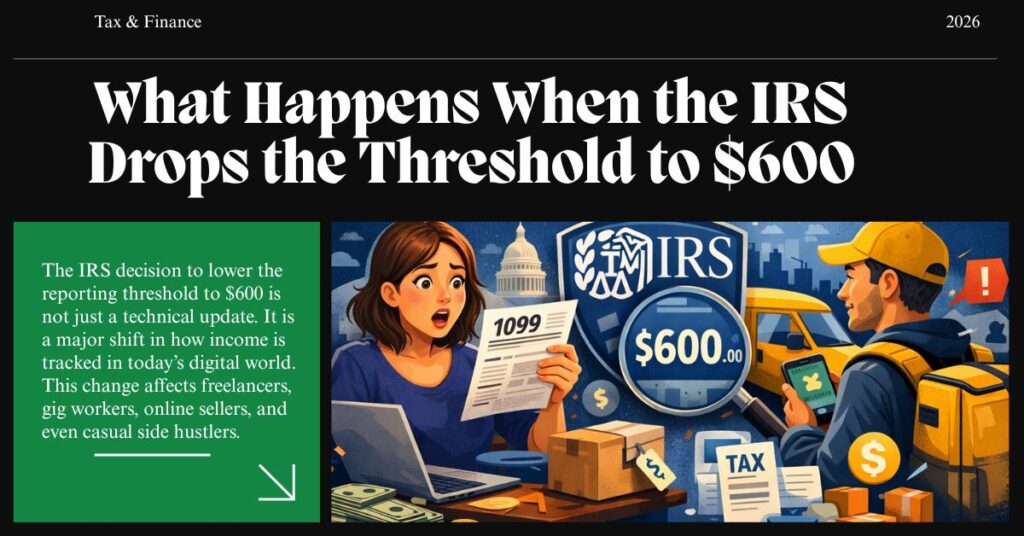
Imagine this for a second. You earn a few hundred dollars from a side hustle. Maybe you sell old items online. Maybe you do small freelance work. One day, you receive a tax form. Suddenly, the government knows about your income.
Sounds surprising? For millions of Americans, this is now real.
The IRS decision to lower the reporting threshold to $600 is not just a technical update. It is a major shift in how income is tracked in today’s digital world. This change affects freelancers, gig workers, online sellers, and even casual side hustlers.
In this guide, you will learn what the new rule means, who it impacts, and how to stay safe and stress-free during tax season.
IRS Tax Update: IRS Online Account Warning 2026 Tax Deadline: One Simple Step Could Protect Your Tax Refund
Understanding the IRS $600 Rule Threshold – What Changed and Why It Matters

Let’s keep this simple.
Before, payment platforms reported income only if you earned more than $20,000 and had 200 transactions. Now, they must report your income if you earn $600 or more in a year.
This rule mainly applies to Form 1099-K reporting. Platforms like PayPal, Venmo, and freelance apps must send this information to the Internal Revenue Service.
Here is the key point:
This is not a new tax. You were always supposed to report all income. The rule only increases visibility.
The goal is simple. The IRS wants to reduce the “tax gap,” which means unpaid or unreported income. The U.S. Department of the Treasury estimates that billions of dollars are lost each year because of underreporting.
So, the rule is about transparency, not punishment.
Latest IRS Updates (2025–2026) – Why the Rule Was Delayed

You may wonder why this rule has taken years to implement. The IRS did not want confusion or errors.
That is why the rollout is happening in phases.
Here is the timeline:
- 2023 and 2024: Temporary higher thresholds to give time for adjustment
- 2025: Gradual enforcement for some platforms
- 2026: Expected full implementation for most digital payments
The Government Accountability Office also recommended a smoother transition. This helps both taxpayers and companies update their systems.
The result? Less chaos. More accuracy.
IRS Tax Update: Understanding your Form 1099-K (Read from The IRS Official Site)
Who Is Most Affected by the IRS $600 Rule – Real-Life Situations
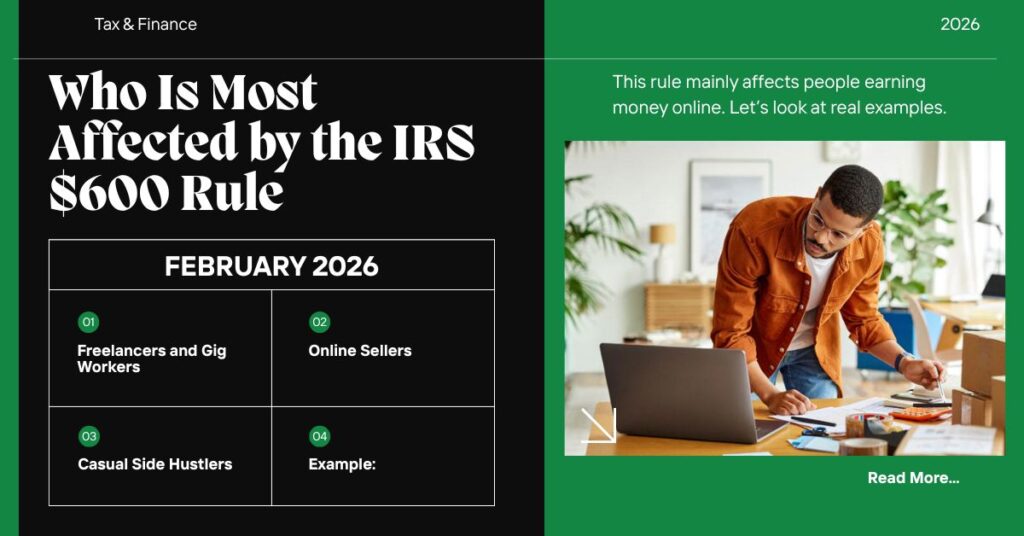
This rule mainly affects people earning money online. Let’s look at real examples.
Freelancers and Gig Workers
If you earn through rideshare, delivery, or freelance work, you will likely receive a Form 1099-K.
For example, a freelance writer earning $5,000 from multiple apps will now receive clear income reporting. This reduces audit risk but increases recordkeeping.
Online Sellers
Many people worry about taxes when selling personal items.
Here is the truth. If you sell used items at a loss, you usually do not owe tax. But the transaction may still be reported.
Example:
You bought a sofa for $1,200 and sold it for $400—no taxable profit. But you must show proof of the original cost.
Casual Side Hustlers
The IRS now pays closer attention to hobby income. This means that casual income without records may create problems.
Keeping records is more important than ever.
Tax Season 2026: How to Stop Overpaying by These Hidden Tax Tips
What the IRS $600 Rule Does NOT Mean – Clearing Common Myths

There is a lot of confusion online. Let’s clear it up.
This rule does NOT mean:
- You will pay tax twice
- Family payments are taxed
- Personal reimbursements are taxed
- Selling used goods at a loss is taxable
The IRS clarified this in public guidance. Still, poor documentation can create issues.
So the real risk is not taxes. It is a lack of proof.
How The IRS $600 Rule May Change the Gig Economy
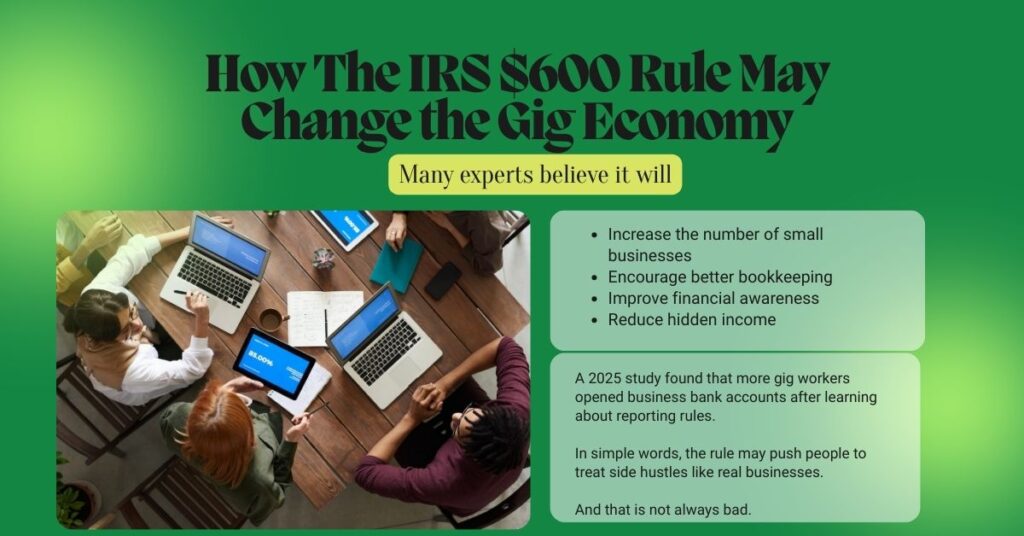
This rule is not only about taxes. It may change how people work.
Many experts believe it will:
- Increase the number of small businesses
- Encourage better bookkeeping
- Improve financial awareness
- Reduce hidden income
A 2025 study found that more gig workers opened business bank accounts after learning about reporting rules.
In simple words, the rule may push people to treat side hustles like real businesses.
And that is not always bad.
Smart Tax Strategies – Simple Steps That Work

From real experience, preparation removes fear.
Here are practical tips:
- Track income every month
- Use simple accounting apps
- Keep receipts and records
- Separate personal and business money
- Save 25% for taxes
- Pay quarterly estimated taxes
One delivery driver shared that saving small amounts weekly made tax season stress-free. Another freelancer said automation changed everything.
Small habits can create big peace of mind.
Pros and Cons of the $600 Rule – A Balanced View

Let’s be honest. No policy is perfect.
Benefits of the IRS $600 Rule
- Fairer tax system
- More transparency
- Reduced underreporting
- Better financial habits
Challenges of the IRS $600 Rule
- More paperwork
- Confusion for beginners
- Time spent on recordkeeping
Still, for many people, learning these skills improves long-term financial health.
Frequently Asked Questions
1. Does the IRS $600 rule mean I will pay more tax?
No. It only improves reporting.
2. Do I need to report income below $600?
Yes. All income must be reported.
3. Are personal payments taxable?
No. Transfers between friends or family are not taxed.
4. What if I sell used items?
If you sell at a loss, you usually owe no tax.
5. Will payment apps report my income?
Yes, if it meets reporting rules.
6. Can I ignore a 1099-K?
No. Always review and report correctly.
7. Do I need a business license?
It depends on your state and activity.
8. Should I hire a tax professional?
If your income grows, it is a smart move.
9. What about cryptocurrency?
Separate rules apply, but reporting is increasing.
10. Is the rule permanent?
Current guidance suggests long-term enforcement.
Final Thoughts – Action Steps for Smart Taxpayers

The IRS $600 rule – threshold is a turning point. It does not create new taxes. It simply makes income more visible.
The best response is not fear. It is preparation.
Start today:
- Track every dollar
- Learn basic tax rules
- Stay organized
- Build simple systems
- Ask for expert help when needed
Those who prepare early gain confidence and control. Those who ignore the change may face stress later.
The future of income is digital. Transparency is here to stay. And with the right habits, you can turn this rule into an advantage.
Disclaimer: This article is for educational purposes only. It is not tax or legal advice. Always consult a licensed professional for personalized guidance.


Hi there! I am Sudip Sengupta, the face behind “Tfin Career”. Tfin Career is a sole proprietorship finance and consulting firm that makes complex tax and financial concepts easy to understand for everyone. With more than 21 years of experience in the field, I have noticed that people cannot make the right decisions in this field. So, I decided to create “Tfin Career” to help individuals and businesses alike. Here I urge those who are confused to make better choices. Also, it is good news for my dear clients and every visitor that I/we are going to start a training module for those who want to choose a career path in Finance and Taxation. Just follow my website.
Thank you for reading this post, don't forget to subscribe!