FAQs: Achieving a 0% Tax Rate on Retirement Income

1. Can I really pay 0% taxes in retirement?
Yes! By strategically using Roth accounts, optimizing Social Security withdrawals, tax-loss harvesting, and smart deductions, you can minimize—or even eliminate—taxes in retirement income.
2. Are Roth IRAs better than Traditional IRAs?
For tax-free growth and withdrawals, yes. Roth IRAs have no required minimum distributions (RMDs), and qualified withdrawals (after age 59½ and 5-year holding period) are tax-free.
3. How do I avoid taxes on Social Security?
Keep your combined income (AGI + 50% of Social Security + tax-exempt interest) below $25,000 (single) or $32,000 (married). Strategies include delaying benefits, Roth conversions, and charitable RMD donations.
4. What’s the best order to withdraw retirement funds?
A mix of taxable, tax-deferred, and Roth withdrawals is often best. Key strategies:
- Use taxable accounts first (capital gains tax rates can be 0% if income is low).
- Convert Traditional IRA funds to Roth in low-income years.
- Delay Social Security to age 70 for higher tax-free benefits.
5. How does tax-loss harvesting work?
Sell losing investments to offset capital gains. You can deduct up to $3,000/year against ordinary income and carry forward excess losses indefinitely.
6. What’s the biggest mistake retirees make with taxes?
Not planning for RMDs (Required Minimum Distributions) at age 73. Large withdrawals can push you into higher tax brackets and increase Medicare premiums.
Also Read: How to Make $200,000 in Retirement: Essential Milestones and Tips
Key Takeaways
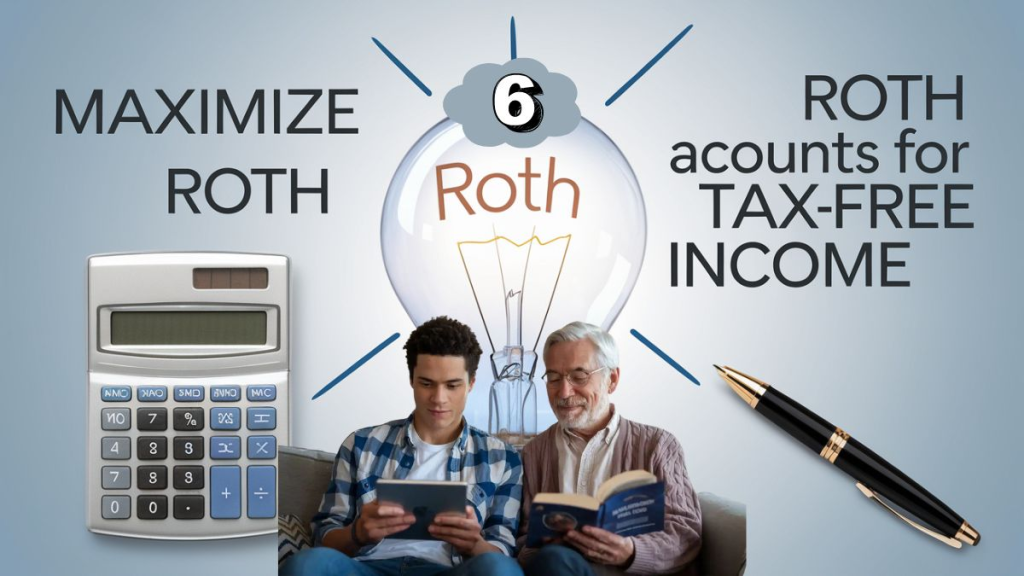
- Maximize Roth Accounts – Use backdoor Roth IRAs, mega Roth 401(k) conversions, and invest in high-growth assets for tax-free compounding.
- Optimize Social Security – Delay benefits until 70 to reduce taxable income and avoid crossing IRS thresholds.
- Smart Withdrawal Strategy – Balance withdrawals from taxable, tax-deferred, and Roth accounts to stay in lower tax brackets.
- Tax-Loss Harvesting – Offset capital gains and deduct up to $3,000 in losses annually.
- Leverage Deductions & Credits – Maximize standard deductions, retirement contributions, and refundable credits like the EITC.
Tax information for seniors & retirees – Provided by the IRS
Final Thoughts

Retirement taxes are not inevitable—they are manageable with the right strategies. By focusing on tax-free income sources (Roth accounts), smart Social Security timing, and strategic withdrawals, you can keep more of your money and enjoy a financially stress-free retirement.
Action Step: Review your retirement accounts today and consider a Roth conversion or tax-loss harvesting opportunity before year-end. Small moves now can lead to massive tax savings later.
Would you like a personalized tax-minimization plan? Let’s discuss your situation!

Hi there! I am Sudip Sengupta, the face behind “Tfin Career”. Tfin Career is a sole proprietorship finance and consulting firm that makes complex tax and financial concepts easy to understand for everyone. With more than 21 years of experience in the field, I have noticed that people cannot make the right decisions in this field. So, I decided to create “Tfin Career” to help individuals and businesses alike. Here I urge those who are confused to make better choices. Also, it is good news for my dear clients and every visitor that I/we are going to start a training module for those who want to choose a career path in Finance and Taxation. Just follow my website.
Thank you for reading this post, don't forget to subscribe!