
Who Must File a US Tax Return? U.S. Taxation Study Material – Part 3
Who Must File a U.S. Tax Return? Filing Requirements, Standard Deduction & Practical Tax Planning
Website: Tfin Career
Author: Sudip Sengupta
Introduction
Many people believe that only those who owe taxes need to file a federal income tax return. In reality, the IRS filing rules are broader. Some taxpayers must file because of their income, filing status, or special tax situations, while others should file even if they are not legally required because doing so may help them claim refunds or refundable tax credits.
Understanding these rules is one of the most important foundations of U.S. taxation. It can help taxpayers avoid penalties, recover overpaid tax, and receive valuable tax benefits.
Table of Contents
Learning Objectives
By the end of this chapter, you will be able to:
- Understand who must file a U.S. federal income tax return.
- Know when filing is recommended even if not mandatory.
- Learn the factors that determine filing requirements.
- Compare the Standard Deduction with the Itemized Deduction.
- Apply practical examples to real-life tax situations.
Chapter 1 – Who Must File a U.S. Tax Return?
The IRS does not require every person living in the United States to file a federal income tax return. Whether you are required to file depends on several factors.
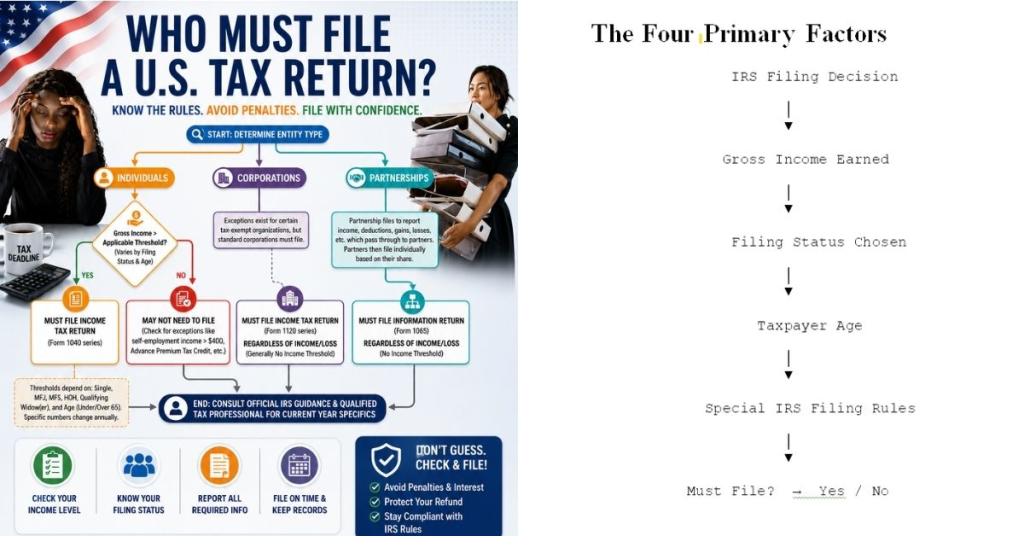
According to IRS Publication 501, the filing requirement generally depends on:
- Gross income
- Filing status
- Age
- Whether you are claimed as a dependent
- Certain special situations (for example, self-employment tax or other filing triggers) (IRS)
U.S. Taxation Basics for Beginners: Federal, State & Local Taxes, Business Entities and IRS Forms
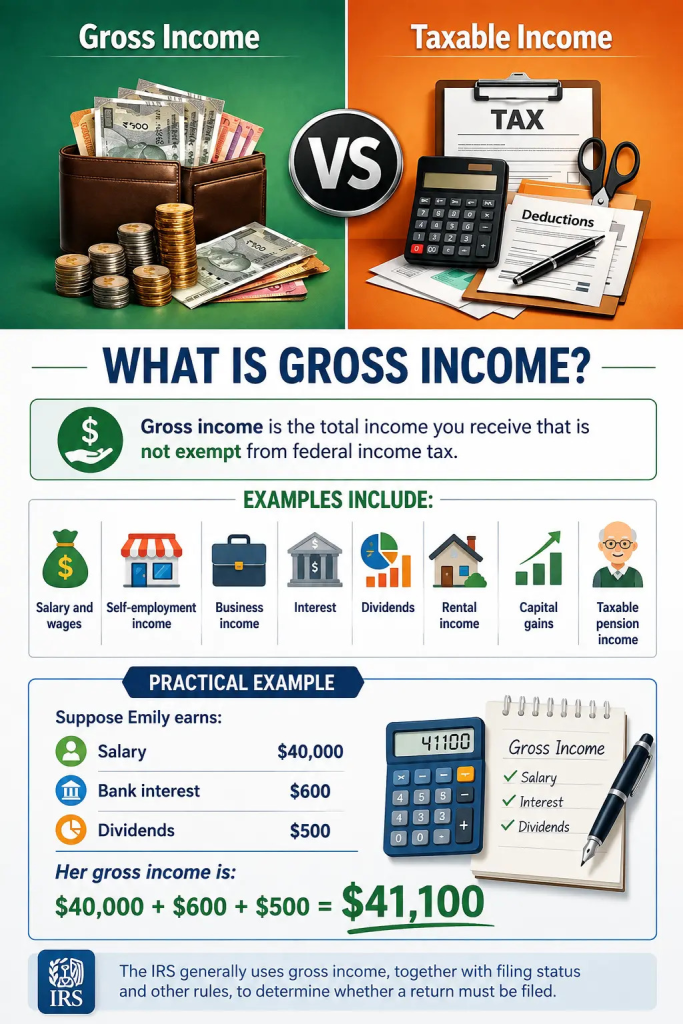
What Is Gross Income?
Gross income is the total income you receive that is not exempt from federal income tax.
Examples include:
- Salary and wages
- Self-employment income
- Business income
- Interest
- Dividends
- Rental income
- Capital gains
- Taxable pension income
Practical Example
Suppose Emily earns:
- Salary: $40,000
- Bank interest: $600
- Dividends: $500
Her gross income is:
$40,000 + $600 + $500 = $41,100
The IRS generally uses gross income, together with filing status and other rules, to determine whether a return must be filed. (IRS)
Decision Flow: Do You Need to File?

Income Is Not the Only Rule
Many beginners think filing depends only on income.
That is not correct.
You may still have to file if:
- You have self-employment income that meets IRS filing thresholds.
- You owe certain additional taxes.
- You received advance tax credits requiring reconciliation.
- Other IRS filing situations apply.
Publication 501 explains that there are additional situations where a return is required even if gross income alone would not normally require filing. (IRS)
Chapter 2 – Who Should File Even If Not Required?
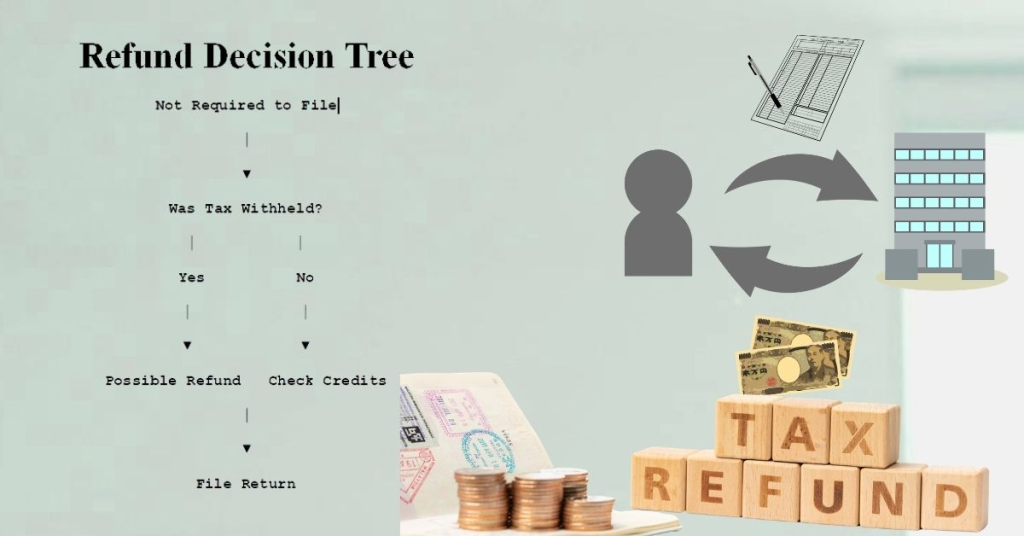
One of the biggest mistakes made by new taxpayers is assuming that “not required to file” means “do not file.”
In many cases, filing is beneficial.
File Even If You Are Not Required When You:
- Had federal income tax withheld from your paycheck.
- Want to claim a refund.
- Qualify for refundable tax credits.
- Want to recover excess withholding.
- Need a tax return for financial records or loan applications.
Publication 501 specifically notes that taxpayers may benefit from filing to claim refunds or refundable credits even when filing is not mandatory. (IRS)
Refund Decision Tree
Quick Revision Box
✔ Filing may be required.
✔ Filing may be optional but beneficial.
✔ Filing can help recover:
- Refunds
- Tax credits
- Excess withholding
Key Takeaways (Part 3A)
- Filing requirements depend on gross income, filing status, age, dependency, and other IRS rules. (IRS)
- Not everyone is legally required to file a return.
- Even when filing is optional, it can provide important financial benefits such as refunds or refundable credits.
- Understanding the filing rules is the first step toward accurate and compliant U.S. tax reporting.
Next: Part 3B will cover Filing Requirements in Detail, Standard Deduction vs. Itemized Deduction, updated 2026 IRS deduction amounts, comparison tables, practical scenarios, FAQs, and exam-oriented revision notes. The standard deduction amounts for tax year 2026 have been updated by the IRS through annual inflation adjustments. (IRS)
For Part 3A, the two practical examples can be made much easier to understand by adding visual decision diagrams. These follow the concepts discussed in your uploaded reference (filing requirements and refunds) while reflecting current IRS guidance that some taxpayers should file even when not required because they may qualify for refunds or credits. (irs.gov)
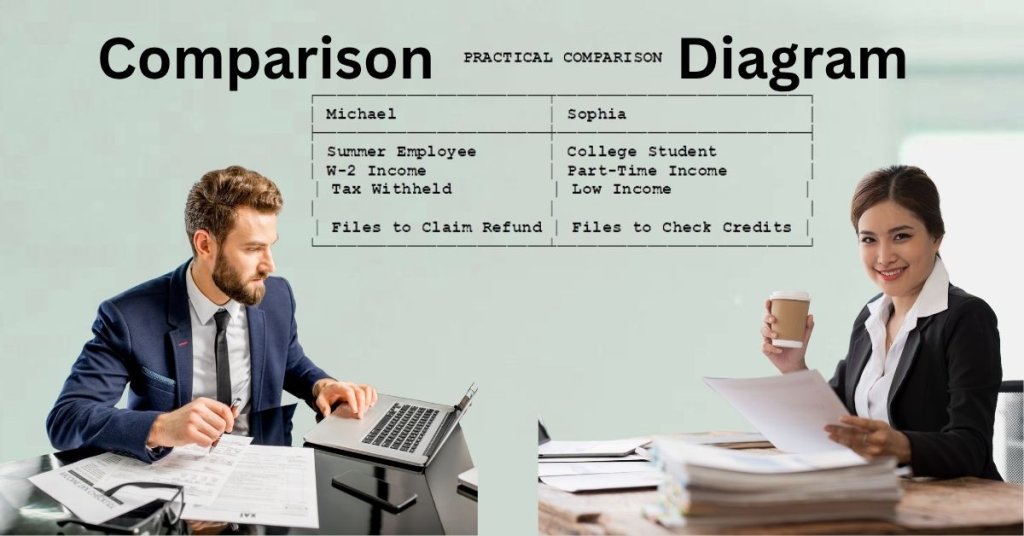
Practical Example 1 – Employee Eligible for a Refund
Scenario
Michael worked during the summer and earned wages. Federal income tax was withheld from his paycheck. Even if he is not required to file, filing a return may allow him to recover the withheld tax.
Key Learning
- Income tax withheld from wages does not automatically return to the taxpayer.
- Filing a federal income tax return allows the IRS to determine whether a refund is due. Publication 501 notes that taxpayers may benefit from filing even when filing is not otherwise required. (IRS)
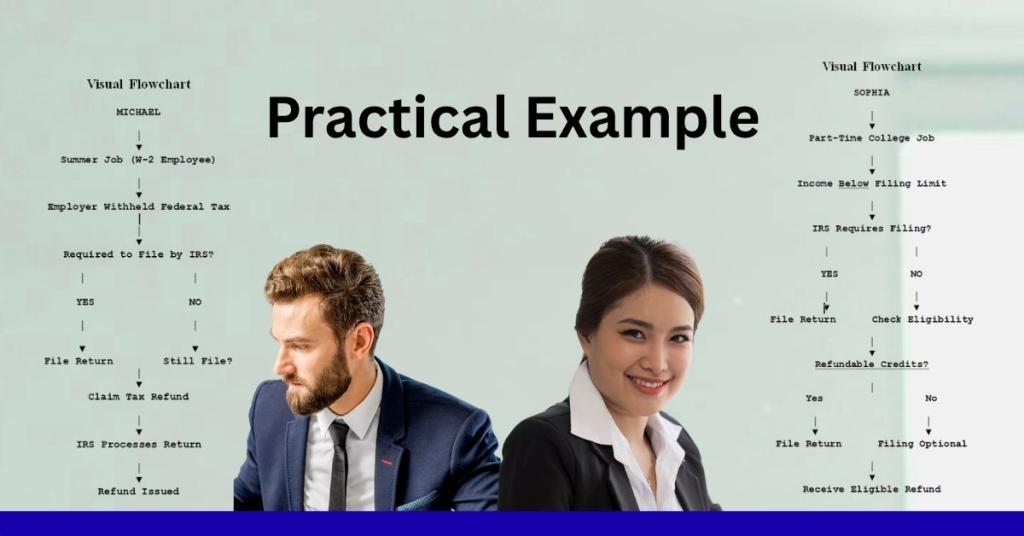
Practical Example 2 – College Student Below the Filing Threshold
Scenario
Sophia is a college student with part-time income below the filing threshold.
Although filing may not be mandatory, filing can still be worthwhile if she qualifies for a refund or refundable credits.
Key Learning
Even when income is below the filing threshold, taxpayers may choose to file to claim a refund of withholding or refundable tax credits if they qualify. (IRS)
Comparison Diagram – Michael vs. Sophia
Decision Tree – Should You File?

Memory Diagram – “F.I.L.E.”
A simple mnemonic for students:
F.I.L.E.
- F → Filing Status
- I → Income Test
- L → Look for Refunds & Credits
- E → Electronically File Form 1040
This helps readers remember the four essential questions before preparing an individual federal income tax return. It complements the filing guidance in Publication 501. (IRS)
