Debt-to-Equity Ratio: An Overview
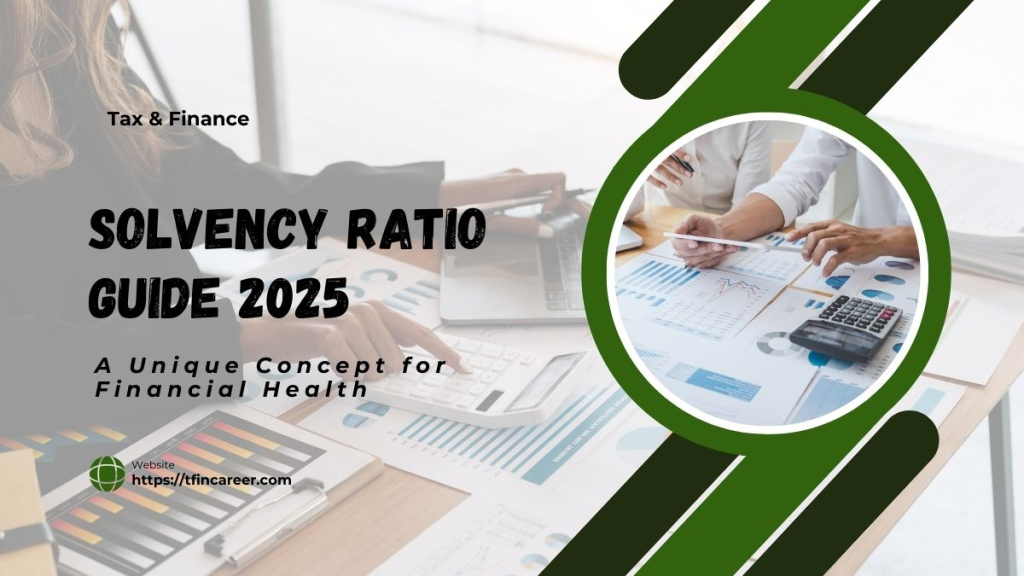
The Debt-to-Equity (D/E) Ratio is a critical solvency metric that compares a company’s total obligations to its shareholder equity. It provides a snapshot of the company’s capital structure and its strategy for financing growth—whether it relies more on debt or owner-funded capital.

Key Explanations:
- Core Purpose: To evaluate a company’s financial leverage and risk profile. It indicates the proportion of creditor financing versus owner financing.
- Risk Indicator: A higher ratio suggests a company is aggressively funding growth with debt, which can be riskier, especially during economic downturns or periods of rising interest rates.
- Benchmarking Context: A “good” or “bad” ratio is entirely dependent on the industry. Capital-intensive industries (e.g., utilities, manufacturing) typically have higher acceptable ratios than service or technology sectors.
Calculative Parts:
The formula for calculating the Debt-to-Equity Ratio is:
Debt-to-Equity Ratio = Total Liabilities / Total Shareholders’ Equity
- Total Liabilities: This includes all short-term and long-term debts and obligations (e.g., loans, bonds payable, accounts payable).
- Total Shareholders’ Equity: This represents the net assets of the company, which remain after subtracting liabilities from assets. It includes items like common stock and retained earnings.
Interpretation Example:
- A ratio of 1.5 means that for every $1 of equity, the company has $1.50 in debt. This is often stated as a debt-to-equity of 1.5x.
- A ratio of 0.8 means the company uses $0.80 in debt for every $1 of equity, indicating a more conservative financial structure.

Hi there! I am Sudip Sengupta, the face behind “Tfin Career”. Tfin Career is a sole proprietorship finance and consulting firm that makes complex tax and financial concepts easy to understand for everyone. With more than 21 years of experience in the field, I have noticed that people cannot make the right decisions in this field. So, I decided to create “Tfin Career” to help individuals and businesses alike. Here I urge those who are confused to make better choices. Also, it is good news for my dear clients and every visitor that I/we are going to start a training module for those who want to choose a career path in Finance and Taxation. Just follow my website.
Thank you for reading this post, don't forget to subscribe!